


What is subscription management?
Billing is one part of it. The rest is everything that happens to the agreement after the customer says yes.
Short answer
Subscription management is the ongoing administration of a recurring customer agreement. It covers the plan the customer bought, the billing schedule, changes to the plan, renewal and cancellation, and the record of what happened and when.
How it works
A subscription starts at sign-up and is kept in a known state, such as active or ended. A plan change or a renewal is recorded against the same agreement, rather than being handled as a new sale each time.
Illustrative example
Hypothetical: a customer starts a monthly service, moves to a larger package in month four and cancels at the end of month nine. Management records the upgrade, the renewal dates and the end date. Billing produces the charges for each period.
Common confusion
Subscription billing and subscription management are often used as if they meant the same thing. Billing is the charge schedule. Management is the wider lifecycle that the charges belong to.
How Komashi handles it
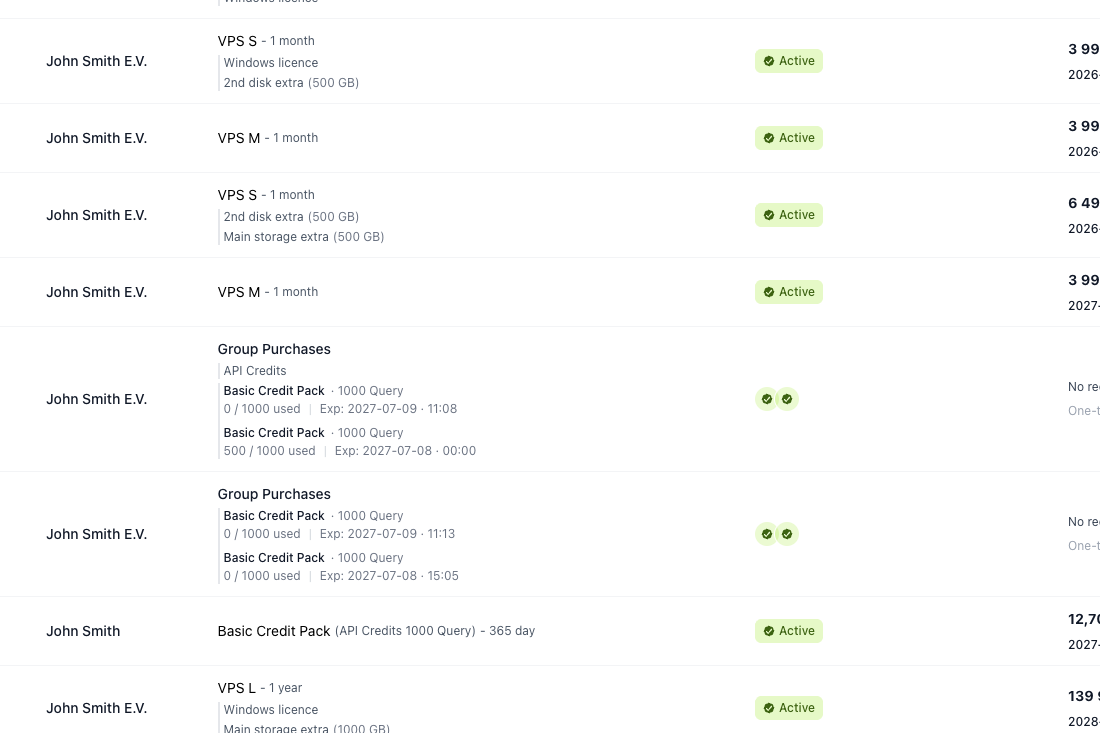
Komashi keeps each subscription as one record with its plan, billing period, status, renewal date and payment state. Changes such as upgrades, downgrades and cancellations are recorded against that record, so staff and customers see the same history.
Common questions
Is subscription management just a billing tool?
No. Billing is part of it. Subscription management also covers the agreement itself: its status, changes, renewal and cancellation.
Do I need it if I only invoice once a month?
Not necessarily. A simple monthly invoice may need little more than a schedule. It becomes useful once customers change plans or cancel and you need one record of those events.