

Compare ways to run your subscription business.

Compare the workflow, responsibilities and setup requirements behind different subscription platforms.

Start with what you want to sell.

Komashi focuses on the service offer and the customer workflow, not only billing infrastructure.

Understand who handles payments and tax.

Platform models differ. Compare provider responsibilities before choosing.

Review your integration needs.

Consider the checkout, customer portal, APIs, data and configuration your team needs.

Compare by responsibility

  • Storefront who presents the offer and runs checkout.
  • Payment processing which provider receives customer payments.
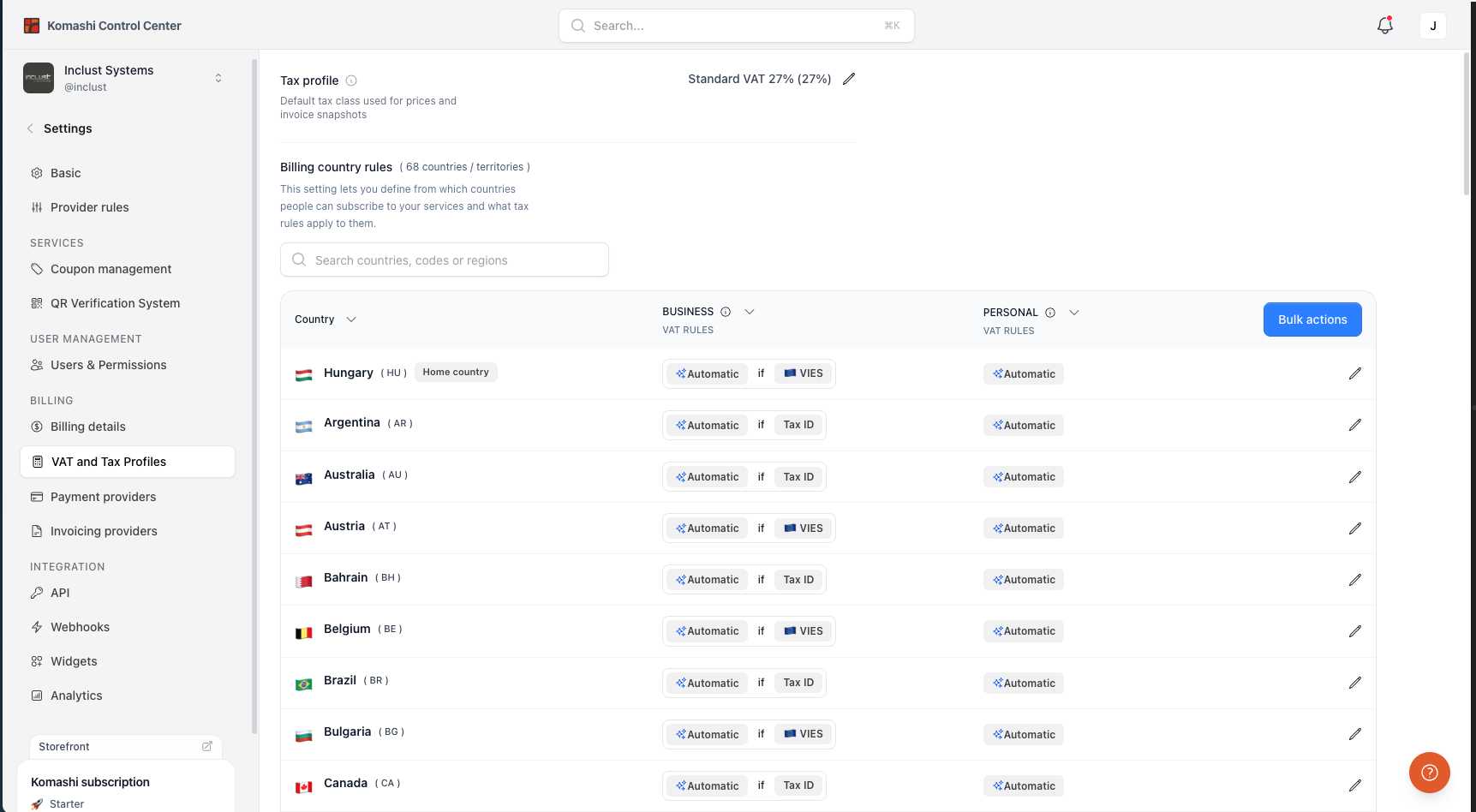
  • Invoicing and taxes who issues invoices and which tax treatment applies.

Read a comparison

Komashi and Stripe Billing Start from billing or start from the service: how the two approaches differ in workflow, checkout and responsibilities.
Best for
Teams building a custom product around Stripe billing.
Key difference
Komashi starts from the service, its packages and storefront. Stripe Billing starts from billing primitives.
Check before choosing
Whether you need a storefront, and who issues your invoices.
Read the comparison
Komashi and Chargebee How an offer is set up, how customers buy, and how your business operates it day to day.
Best for
Operators running a service offer, or complex subscription revenue operations.
Key difference
Komashi starts from the service you sell. Chargebee starts from the subscription revenue operation.
Check before choosing
How many payment and invoicing connections you need, and how often prices change.
Read the comparison
Komashi and Recurly Subscriber lifecycle, self-service and gateway setup compared with a service-first storefront.
Best for
Subscription businesses focused on subscriber retention and running several gateways.
Key difference
Komashi starts from the service and its storefront. Recurly starts from the subscriber lifecycle.
Check before choosing
Which gateways you must run, and whether you need a storefront built around a service.
Read the comparison
Komashi and Paddle Who is the seller of record, who handles VAT and sales tax, and what that means for your business.
Best for
Digital product sellers who want a merchant of record, or service businesses that stay the seller of record.
Key difference
Paddle is a Merchant of Record. Komashi is not, so your business keeps the seller relationship and tax obligations.
Check before choosing
Whether you need a merchant of record to take on VAT and sales tax.
Read the comparison