


What is subscription management?
Subscription management is the work of running an ongoing customer agreement, from the plan someone chooses to changes, renewals and cancellation. Billing handles scheduled charges; management keeps the service, customer and subscription status connected around those charges.
Quick answer
Subscription management is the work of running an ongoing customer agreement after the sale: defining the recurring offer, onboarding the customer, handling changes and renewals, and closing the relationship cleanly. Billing is one part of that work, covering scheduled charges and invoices.
What subscription management includes
| Offer | Billing | Lifecycle management |
|---|---|---|
| What the customer receives | The charge schedule | Onboarding and service assignment |
| How often it is delivered | Charge and invoice events | Plan changes and add-ons |
| What the recurring price covers | Provider processing of each charge | Renewal and cancellation |
| What sits outside the scope | Invoice records where configured | Customer questions and exceptions |
One customer through the lifecycle
Hypothetical example: a small studio sells a monthly website care plan for $120. A new customer signs up, and the team confirms the scope and the support channel. The first charge runs through the connected provider. Three months later the customer asks to add a second site. The team records the request, confirms when the change starts and keeps the agreement and its history on one subscription record.
A subscription through its lifecycle
- Define the recurring offer
- Onboard the customer
- Manage active service
- Handle a change or renewal
- Close the relationship clearly
How Komashi fits
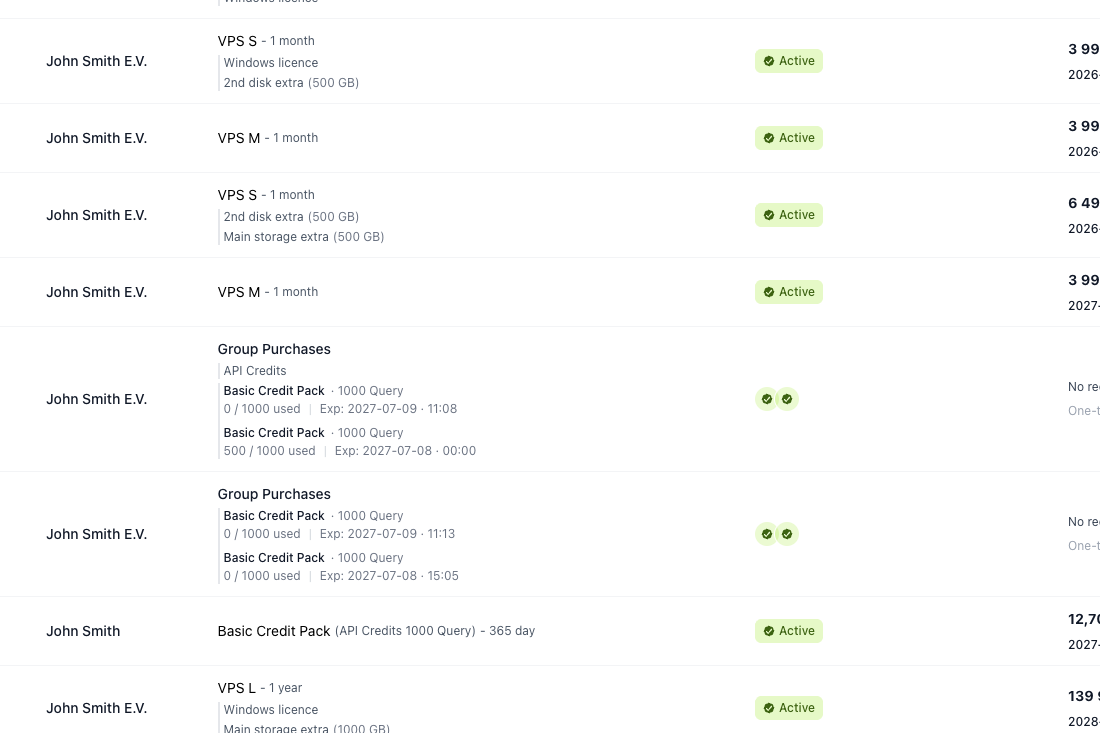
Komashi keeps each subscription as one record with its status, renewals and changes, connected to the customer and the payment workflow. The record shows what changed and when.
See subscription managementReady to put this into practice?
See how Komashi manages subscriptions.