


What is the difference between MRR and ARR?
Two ways of stating the same recurring income, on a monthly or an annual basis.
Short answer
MRR, monthly recurring revenue, is the recurring income you expect each month from active agreements. ARR, annual recurring revenue, is the same measure over a year and is usually MRR multiplied by 12. Neither includes one-time payments such as setup fees.
How it works
Add up the monthly value of every active recurring agreement to get MRR, then adjust for the month's changes such as upgrades, downgrades and cancellations. ARR comes from the same figure, so the two move together.
Illustrative example
Hypothetical values: 50 customers paying $190 a month give an MRR of $9,500 and an ARR of $114,000. A one-time $75 setup fee for a new customer is part of neither figure.
Common confusion
Multiplying one month's one-time income by 12 does not give ARR. Only agreements that repeat count toward recurring revenue.
How Komashi handles it
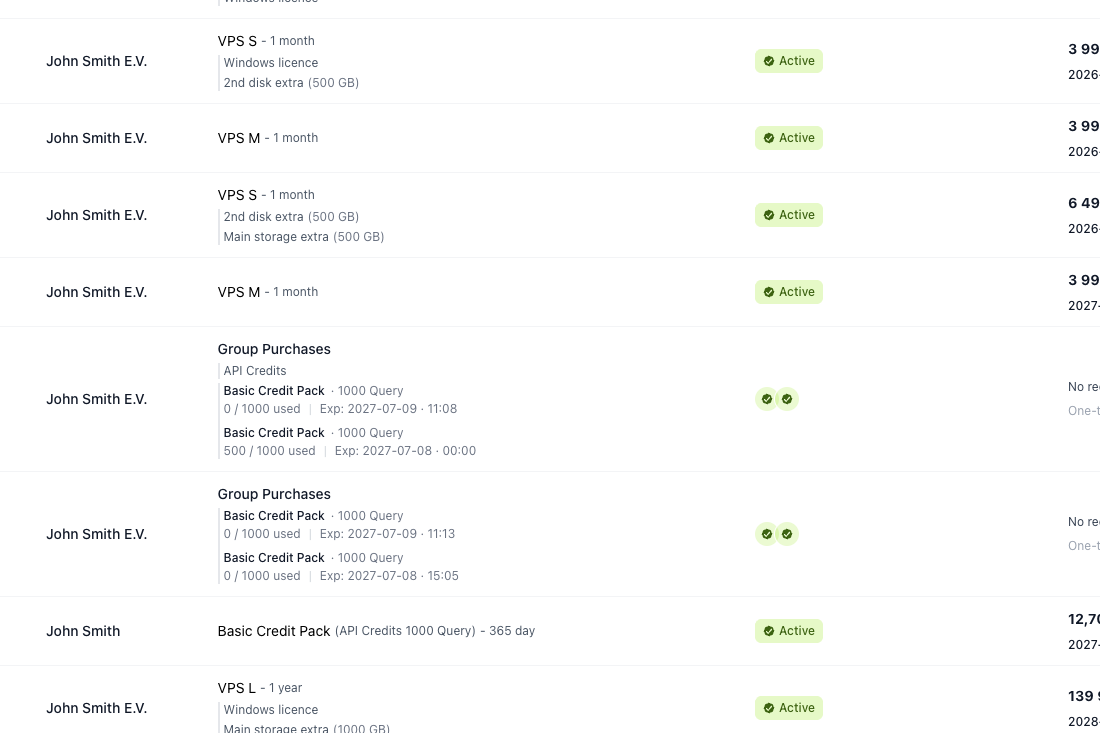
Komashi does not show MRR or ARR as a built-in metric. It does record each subscription's recurring amount, billing period and status, which are the inputs for either figure. The recurring revenue calculator on this site works out an estimate from figures you enter.
Common questions
Is ARR always 12 times MRR?
For a simple monthly plan, yes. Once plans, add-ons and yearly billing are mixed, build the figure from each agreement's recurring amount instead of scaling one total.
Do one-time fees count toward MRR or ARR?
No. Setup fees and one-time services are reported separately, so they do not inflate either figure.