


What is churn?
How many customers, or how much recurring revenue, a service loses in a set period.
Short answer
Churn is the loss of recurring customers or recurring revenue over a period. Customer churn counts the subscribers who leave. Revenue churn counts the recurring value lost, including downgrades. A churn rate divides the loss by the base at the start of the period.
How it works
Count the agreements that ended in the period, whether through cancellation, non-renewal or a payment that was never recovered. Divide that number by the agreements active at the start of the period. Track the reasons separately, because a failed card and a deliberate cancellation need different responses.
Illustrative example
Hypothetical values: 200 active subscribers at the start of the month, 6 cancellations and 2 subscriptions ended after a failed payment. Customer churn is 8 of 200, or 4%.
Common confusion
Churn is not the number of cancellations in a month. New sign-ups can hide the loss in a total count, so always compare the loss with the starting base.
How Komashi handles it
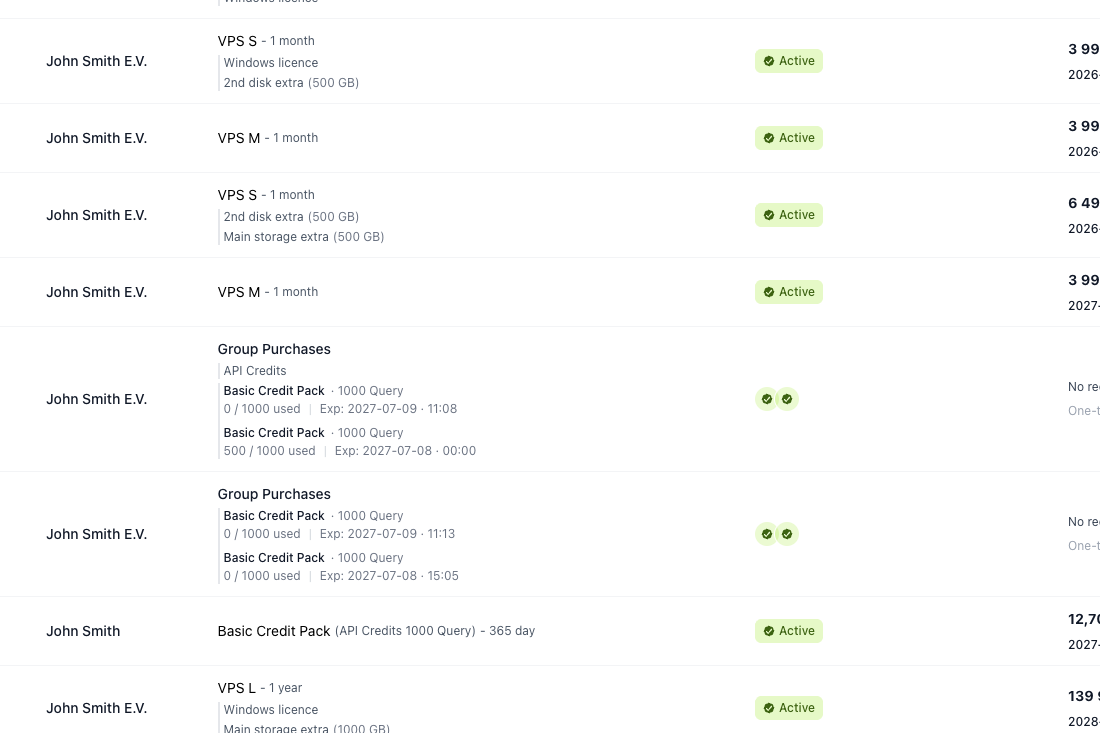
Komashi keeps each subscription's status and payment state in one record, which is where a churn count starts. Komashi does not show a churn rate. Its dashboard shows active subscriptions that end within the next 30 days as a churn-risk count.
Common questions
Does a failed payment count as churn?
It can. A subscription that ends because a payment failed and is not recovered is lost, so it counts toward churn. Many teams also report it separately.
What is a good churn rate?
There is no universal benchmark that applies to every service. Compare your own rate across periods and plans, and do not adopt a figure from a different market as a target.