


What is usage-based pricing?
A price that moves with the amount of a service a customer uses, not only with the calendar.
Short answer
Usage-based pricing charges a customer for how much of a service they use, such as sessions, credits or messages. It is often combined with a fixed recurring fee and sometimes with an included allowance.
How it works
Usage is measured over a period and compared with the allowance in the plan. Usage within the allowance is included. Usage beyond it is charged only if the offer says so.
Illustrative example
Hypothetical values: a plan includes 10 sessions a month, and each extra session costs $5. A month with 13 sessions has 3 extra sessions, so $15 on top of the monthly fee.
Common confusion
A usage allowance is not always a charge. Some services only need a cap: the customer can use up to the limit, and more use means buying another unit. The offer should state which model applies.
How Komashi handles it
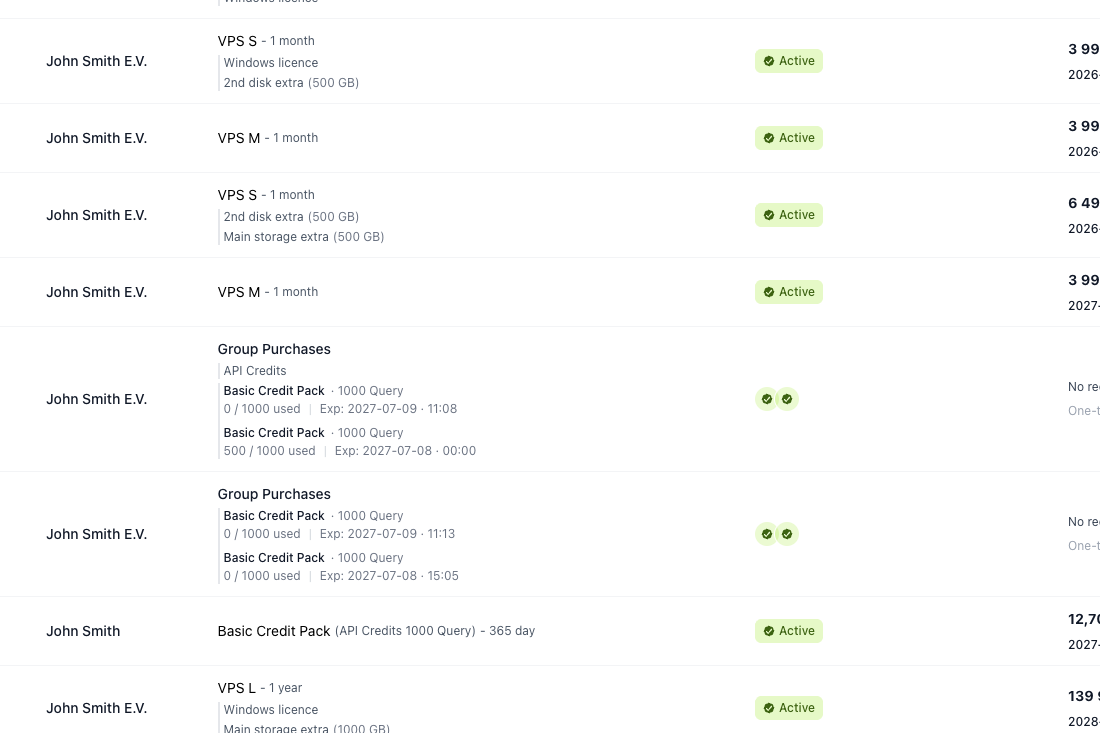
Komashi can set usage allowances for services that need them, show usage against the limit and offer recurring or one-time add-ons. Komashi records usage against the limit and does not bill extra usage automatically. Usage cannot pass the limit, so more room means adding another unit.
Common questions
Does Komashi bill extra usage automatically?
No. Komashi records usage against the limit you set and does not bill extra usage on its own.
Can a limit be a number of credits or sessions?
Yes, where the service needs one. An add-on option can carry a limit per unit, and the allowance is the number of units multiplied by that limit.