

7 local businesses that could benefit from memberships
Car wash, florist, barber and four surprising examples: which local businesses should sell a monthly membership, what goes in the allowance, and what to check before launch.
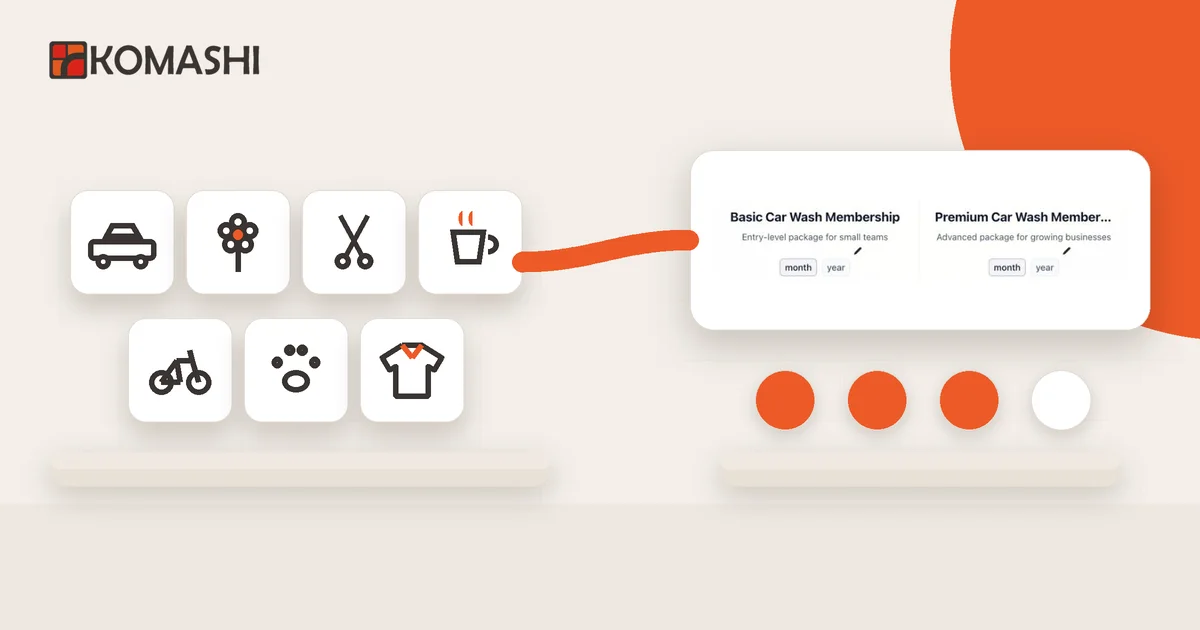
At a glance
A local business should sell memberships when customers come back on their own, the service can be counted in units (washes, haircuts, coffees, shirts), and your capacity holds up if every member uses their full allowance. Car washes, florists and barbers are the obvious fits; coffee shops, bike repair shops, dog groomers and dry cleaners are less obvious but work the same way. Write down the allowance and the overage rule before you launch.
Who are memberships for?
Car wash, florist, barber… and four you wouldn’t expect.
Most local businesses sell one visit at a time: a customer comes in, pays and leaves, and nobody knows when they’ll be back. Yet in many of these shops the purchase repeats by itself. Turn that repeat into a monthly membership and you can see revenue ahead of time, while the customer stops deciding afresh each time whether to come to you.
It doesn’t suit every shop. Local business membership ideas work when all four of these are true:
| Question | If yes | If no |
|---|---|---|
| Does the need come back on its own? | Hair grows, cars get dirty, coffee runs out | A once-a-year purchase suits a one-off price |
| Can it be counted in units? | Washes, haircuts, bouquets, coffees, shirts | If not, a fixed plan without an allowance |
| Can your capacity cope if everyone uses the allowance? | Peak worked out in advance | The membership creates queues and disappointment |
| Can the customer see how much they’ve used? | No arguments at the end of the month | “Which one was this?” questions at the counter |
The seven examples below run through those four questions. Prices and allowances are made up: they illustrate, they’re not market averages and not suggested prices.
The three obvious ones
1. Car wash
Cars get dirty every week, a wash is an easy unit to count, and customers live or work nearby anyway.
- Example plan: 4 exterior washes a month for £36. Paid one at a time, that would be £12 each.
- The allowance: the 4 washes cover one monthly period; unused washes don’t roll over, or you state in advance that they do.
- Watch out for: the Saturday morning peak. If every member comes then, the membership creates a queue. You could offer a cheaper weekday-only membership too.
2. Florist
Offices, clinics and restaurants change the flowers on reception every week, and the same works for homes.
- Example plan: a medium table bouquet every two weeks, 2 a month, for £50, with delivery as an add-on.
- The allowance: the number of bouquets; the season decides the flowers, so say so in the offer.
- Watch out for: delivery costs. Make delivery a separate add-on so members who collect in store don’t pay for it.
3. Barber or hairdresser
Hair grows, and regulars come every 3–5 weeks anyway. A membership makes that rhythm predictable.
- Example plan: 2 haircuts + 1 beard trim a month for £45.
- The allowance: number of visits, not time. Colouring and treatments are charged separately.
- Watch out for: members still need an appointment. A membership doesn’t replace a booking system; it only handles payment and the allowance.
The four you wouldn’t expect
4. Coffee shop
Regulars drink the same thing every day. A coffee membership isn’t about the discount; it’s about regulars getting used to you rather than the chain on the corner.
- Example plan: 20 coffees a month (any standard coffee drink) for £45.
- The allowance: one coffee a day; state that unused coffees don’t carry over to next month.
- Watch out for: recording usage at the counter has to be quick. If it takes longer than paying, the queue won’t like it.
A coffee membership in practice (illustrative flow):
- The customer picks the 20-coffee monthly plan from the link the coffee shop shares, and pays.
- At the counter you identify them, for example by looking up their name or phone number in the customer record. Komashi’s current documentation doesn’t describe QR-code identification at the counter, so this is part of your own process.
- You record the coffee. Your team does this in Komashi, or if you have your own till or counter system, it can increase usage through the Komashi API.
- The customer sees how many coffees are left this month on their management link.
5. Bike repair shop
Everyone brings their bike in for a service in spring, then nobody for months. An annual membership smooths out that wave.
- Example plan: £75 a year: 2 safety checks (spring and autumn) + 1 puncture repair, parts extra.
- The allowance: it covers a year, not a month; a yearly period is more natural here than a monthly one.
- Watch out for: schedule the checks, or members will all turn up in April too.
6. Dog groomer
Dogs need regular bathing and trimming, and owners don’t enjoy agreeing a time and price from scratch every visit.
- Example plan: a bath and nail trim every month, a full trim every two months: £48 a month (small and medium dogs).
- The allowance: per dog and per size; large dogs get a separate plan.
- Watch out for: one visit takes a lot of time. Work out how many members your weekly capacity can take before you advertise.
7. Dry cleaner
Office workers bring shirts in every week, and at the dry cleaner each one is a separate item every time.
- Example plan: 20 shirts cleaned and pressed a month for £50.
- The allowance: number of items; suits, coats and stain treatment are charged separately.
- Watch out for: the count should be easy to see at the counter and for the customer, or there’ll be an argument at the end of the month.
Does it pay for the business? A worked example
Every example raises the same question: how much of the fee is left if a member uses every visit? It matters most for labour-heavy services, so here it is worked through for the barber. The numbers are made up.
Assumptions: a haircut takes 40 minutes, a beard trim 20. The internal hourly cost (wages plus a share of rent and overheads) is £18 an hour, with £1 of materials per visit. Paid one at a time, a haircut would be £20 and a beard trim £10, so the monthly allowance is worth £50 at single-visit prices. The membership is £45.
| Full use | Average member | |
|---|---|---|
| Services used | 2 haircuts + 1 beard trim (2 visits) | 1 haircut + 1 beard trim (1 visit) |
| Working time | 100 minutes | 60 minutes |
| Labour cost (£18/hour) | £30 | £18 |
| Materials | £2 | £1 |
| Margin from the £45 fee | £13 | £26 |
What the table shows:
- Full use has to stay profitable. Here £13 is left. At an internal rate of £22 an hour it drops to about £6.33, so price the membership for the full allowance, not for the “average member”.
- Capacity is the real limit. A member who uses the full allowance takes 100 minutes a month. With 120 working hours a month, one barber can serve at most 72 such members, with no time left for anyone else.
- Payment provider fees and VAT aren’t included; deduct them according to your own terms.
For the coffee shop or the dry cleaner, fill in the same table: materials (coffee, cups, chemicals) weigh more there, and working time less.
What goes in the membership, and what stays out?
All seven examples share the same structure:
| Element | What it means | Example |
|---|---|---|
| Plan at a fixed monthly or yearly price | What every member gets | 4 washes, 2 haircuts, 20 coffees |
| Allowance | How much fits into one period | “4 of 4 used” |
| Add-on | What only some members want | Delivery, large dog |
| Separate charge | What doesn’t fit the membership | Colouring, parts, stain treatment |
The subscription add-ons and usage limits page describes the same split: a fixed plan, an add-on or an allowance, depending on whether usage can be measured.
Write the overage rule down before you launch. Komashi doesn’t bill usage above the allowance automatically: the member reaches their allowance and it stops there. Anything beyond it is a separate item, a bigger plan or an add-on.
What Komashi handles, and what it doesn’t
Membership systems tend to lump four different things together. It helps to separate them:
| Capability | In Komashi | Source |
|---|---|---|
| Selling the membership, payment, renewal | Yes | memberships use case, docs |
| Recording usage against the allowance | Yes: your team records it, or your own system does through the API | memberships page, REST API docs |
| Identifying a member at the counter (e.g. scanning a QR code) | Not described in the current documentation | – |
| Physical entry, gate or door opening, bookings | No | memberships page FAQ |
According to the memberships use case, Komashi shows each member’s usage in the current period against what the membership includes, and recorded usage can’t go above the included amount. Also part of it:
- A management link with no login: a link created from the customer record opens only that customer’s subscriptions. The member sees their plan, renewal date and usage there. More on the self-service customer portal for subscriptions.
- Plan changes: an upgrade applies straight away with a prorated charge; a downgrade waits for renewal. According to the docs, decreases are not refunded.
- Cancellation: by default, a member keeps the membership until the end of the paid period.
- Cash and bank transfer: count as paid only after your team approves them, which is common for local shops.
Once you’ve decided to launch a membership, the membership billing workflows guide covers joining to renewal: what members should see and how status connects to access.
If your barber or dog groomer needs bookings, or your gym needs an entry gate, that stays a separate tool; Komashi handles the membership, payment and allowance alongside it.
How to get started
- Pick one service and one plan. Don’t start with seven memberships; start with your most frequent purchase.
- Set the allowance from your capacity: how many members can you serve if everyone uses their allowance on your busiest day?
- Write down the rules: what’s in the allowance, what’s charged separately, what happens to unused visits, and how to cancel.
- Create the service with Status switched off: create a free Komashi account, add the plan and allowance, walk through the checkout page yourself, and only then show it to your regulars.
If you’ve been charging per visit and want to switch, the article on turning a one-off service into a subscription shows how to work out the plan from past purchases and offer it to existing customers.
Frequently asked questions
Which local businesses should sell memberships?
Ones where customers come back on their own (washes, haircuts, coffee, flowers), the service can be counted in units, and your capacity holds up when every member uses their allowance. If customers only come once a year, a one-off price or an annual plan fits better than a monthly membership.
Should a membership be unlimited or have an allowance?
Start with an allowance if the service is expensive or capacity-bound (haircuts, dog grooming). Unlimited only works where an extra visit costs you little and capacity can take it. In Komashi the allowance is shown per period, and recorded usage can't go above it.
Does Komashi handle check-ins or door access?
No. Komashi runs the membership offer, payment, usage record and subscription. It doesn't handle physical entry, door opening or bookings, and the current documentation doesn't describe QR identification at the counter. Your team records usage, or your own system does through the API.
Can members pay in cash or by bank transfer?
According to Komashi's product page, bank transfers and cash count as paid only after your team approves them. Online payment methods depend on the payment providers you connect.
Sources and further reading
- Komashi — Membership usage and customer management
- Komashi — Subscription add-ons and usage limits
- Komashi Docs — Service editor
- Komashi Docs — Subscriptions
- Komashi Docs — REST API integration
Updated:
More articles
Membership billing workflows: from signup to renewal
How to build a membership workflow from signup to renewal: what members see, how status relates to access and who handles exceptions.
How to turn a one-off service into a subscription
Turn one-off work into a service subscription model: a worksheet from past jobs, a pricing example, package structure and a migration plan for existing clients.
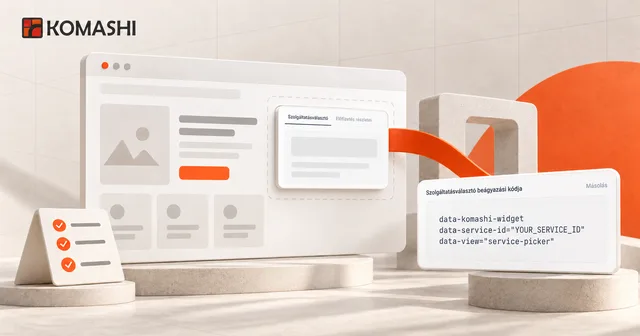
Launch a subscription website: your first-service checklist
Launch a subscription website using your existing site: define an offer, connect a Komashi link or widget, and check payments, invoices and service delivery.