

Monthly vs annual billing: choose with a worked example
Monthly vs annual billing, worked through for a service business: how much an annual discount takes from your margin, and how long a monthly client has to stay to match it.
At a glance
An annual discount doesn't come off your price, it comes off your margin: if 40% of the monthly fee is margin, a 10% annual discount removes a quarter of it. A simplified calculation shows how many months a monthly client would need to stay to bring in the same margin as an annual one (the margin parity point). It's a starting point, not a pricing decision on its own: you also need to see who actually chooses annual.
The short answer
If you sell a monthly service, sooner or later you’ll ask whether to add an annual plan with a discount. The usual answer is a round number (“two months free”, “save 10%”), but the decision really rests on two figures of your own:
- How much margin do you make in a month? The discount comes out of that, not out of the price.
- How long does a monthly client stay? On an annual plan, the client pays for a full year of service up front.
If you haven’t worked out the base monthly fee from your costs yet, start with the guide to pricing recurring services; this article picks up from there: what to do when you add an annual price next to the monthly one.
With those two numbers you can work out whether monthly or annual billing earns you more as a service provider, and how big a discount your offer can carry. The example below is made up: it’s not client data and not a suggested price.
1. The monthly equivalent of an annual price
Starting point: a website maintenance plan at £60 + VAT a month. The monthly work and tools (delivery cost) come to £36, leaving £24 margin a month, which is 40% of the fee.
The annual price formula:
annual price = monthly fee × 12 × (1 − discount)
| Discount | Annual price | Monthly equivalent | Monthly margin | Margin lost |
|---|---|---|---|---|
| 0% (monthly only) | – | £60 | £24 | – |
| 10% | £648 | £54 | £18 | −25% |
| 16.7% (“two months free”) | £600 | £50 | £14 | −42% |
| 25% | £540 | £45 | £9 | −62.5% |
The last column is the point: if 40% of your revenue is margin, every 1% of discount removes 2.5% of your margin. The thinner your margin, the more an annual discount costs you. If only 20% of the monthly fee is margin, a 16.7% discount takes more than four-fifths of it.
2. When does annual billing pay off?
A monthly client pays for as many months as they stay. An annual client pays all 12 months up front, and you deliver for 12 months. Over the first year:
- margin from a monthly client: £24 × months they stay;
- margin from an annual client: 12 × the discounted monthly margin.
The two meet at the margin parity point: the number of months a monthly client has to stay to bring in the same margin as an annual one.
margin parity point (months) = 12 × (discounted monthly margin ÷ full monthly margin)
| Discount | Annual margin per client | Margin parity point |
|---|---|---|
| 10% | £216 | 9 months |
| 16.7% | £168 | 7 months |
| 25% | £108 | 4.5 months |
Read it like this: at a 16.7% discount, an annual client’s first-year margin equals that of a monthly client who stays 7 months. If a given client would have stayed for less time on monthly billing, annual brings in more margin; if they’d have stayed longer, you’re giving the discount to someone who would have paid anyway.
This is a simplified comparison, not enough for a pricing decision on its own. It only compares first-year margin after delivery cost, with the same cost on both sides. It ignores acquisition cost, whether the annual price wins you more or fewer new clients, and which annual clients would have stayed 12 months anyway.
So the real question is who the annual price attracts. If mostly your loyal clients switch to annual, the discount is pure cost. If it’s the less certain ones, it protects revenue.
If you don’t have retention data yet, don’t guess it. Start with a small discount (say 10%) and after 3–6 months check who chose annual and how long monthly clients stayed.
3. What the table doesn’t show
Cash up front. An annual client pays £600 on day one in the 16.7% version, or £648 in the 10% version; a monthly client pays £60. If cash flow is tight, that’s worth something on its own. But don’t spend it as if you’d already earned it: the next 12 months of work are still ahead.
Fewer payment attempts. One charge a year means fewer chances of a failed payment than twelve. In exchange, a failed annual renewal puts a larger sum at risk at once.
Cost changes. If your delivery cost rises during the year (wages, software), the annual client’s price doesn’t follow. In the example, a 10% cost increase (£39.60) cuts the monthly margin at a 16.7% discount to £10.40.
Willingness to pay. For smaller clients, a year’s fee in one go can be too much. That’s why it’s worth keeping a monthly option rather than offering annual only.
4. Two offers side by side
Here’s how the numbers can become an offer (made-up example):
| Monthly | Annual | |
|---|---|---|
| Price | £60 + VAT / month | £648 + VAT / year |
| Monthly equivalent | £60 | £54 |
| Discount | – | 10% (£72 a year) |
| Cancellation | at the end of the paid month | at the end of the paid year |
| Downgrade | at the end of the month | at the end of the year |
“Two months free” sounds good, but in the example it removes 42% of monthly margin. Ten percent is a smaller promise, and you only lose out with it if monthly clients would stay longer than 9 months on average.
To run the numbers with your own hours and costs, Komashi’s subscription pricing calculator compares monthly, quarterly and yearly prices from your own inputs in the same way. It doesn’t model tax, payment fees or cancellations, so account for those separately.
5. What to put in your terms up front
Annual plans cause surprises at renewal and when clients change plan, unless the rules are written down first:
- Cancellation: does an annual client keep the service until the end of the paid period, or get a refund? Your own terms decide. For consumer clients, have a lawyer review them; this article isn’t legal advice.
- Downgrades: according to Komashi’s subscriptions documentation, a downgrade is scheduled, takes effect at the end of the current billing cycle, and decreases are not refunded. On a yearly period, that’s the end of the year.
- Upgrades: apply straight away; the amount due today is prorated for the rest of the current period.
- Price rises: editing a catalogue price doesn’t re-price existing subscriptions. An annual client stays on the old price until renewal, and you need to announce the new one in advance.
- Renewal reminder: before an annual renewal (for example 30 days ahead), tell the client what renews, for how much and how to cancel. Check which notifications your own setup sends, and send whatever is missing yourself.
6. Setting it up in Komashi
On the Pricing tab of the service editor, each plan is a column with month / year period toggles and its own price. So one plan can carry both a monthly and an annual price:
- Work out the annual price with the formula above and enter it as the net price on the plan’s year period. Prices on the canvas are shown gross.
- If you offer a free trial, decide per period: according to the docs, under Manage periods you can offer a trial on the monthly price and none on the yearly one, or the other way round.
- Until prices are final, switch off the service’s Status, because anyone with the link can buy an active service.
- Walk through the checkout page with both periods before you send the link out.
The service packages and recurring prices page shows how plans, periods and one-time fees come together in one offer. Subscription management shows each client’s billing period, plan changes and renewal date.
Next step
Write down your monthly fee, your monthly delivery cost and how many months monthly clients stay on average. Work out the margin parity point at 10% and at 16.7%, for example in the pricing calculator linked above. If monthly clients leave well before that, an annual price is worth testing; if they stay longer, start with a small discount and measure who picks it.
Once you have the numbers, create a free Komashi account and set up the plan with monthly and yearly periods, with Status switched off until you’ve walked through the checkout page. If this is your first subscription offer, the launch checklist also covers connecting the plan to your own website.
Frequently asked questions
How big should an annual subscription discount be?
There's no good universal number. Work out how much margin is left each month after the discount, and how many months a monthly client would need to stay to bring in the same. In the example, with a 40% margin, a 10% discount gives a 9-month margin parity point and 'two months free' (about 16.7%) gives 7 months. It's a simplified comparison; for the final decision, also look at who chooses the annual plan.
Should I offer monthly and annual billing side by side?
Usually yes: monthly keeps the entry barrier low, annual brings cash upfront and a longer commitment. In Komashi a plan can have both a monthly and a yearly period, each with its own price.
What happens when an annual subscriber downgrades?
According to Komashi's docs, a downgrade is scheduled and takes effect at the end of the current billing cycle, and decreases are not refunded. On a yearly period that means the end of the year, so put it in your terms up front.
Does changing the annual price affect existing subscribers?
Not automatically. The docs say editing a catalogue price doesn't change the price of existing subscriptions, so price rises for current clients have to be communicated separately.
Sources and further reading
Updated:
More articles
How to price a recurring service without guessing
A formula and a worked example for pricing a recurring service: monthly cost, target margin, one-time fees, and what an annual discount does to your margin.
How to turn a one-off service into a subscription
Turn one-off work into a service subscription model: a worksheet from past jobs, a pricing example, package structure and a migration plan for existing clients.
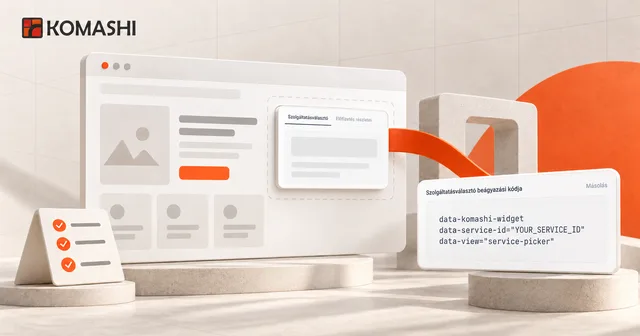
Launch a subscription website: your first-service checklist
Launch a subscription website using your existing site: define an offer, connect a Komashi link or widget, and check payments, invoices and service delivery.